
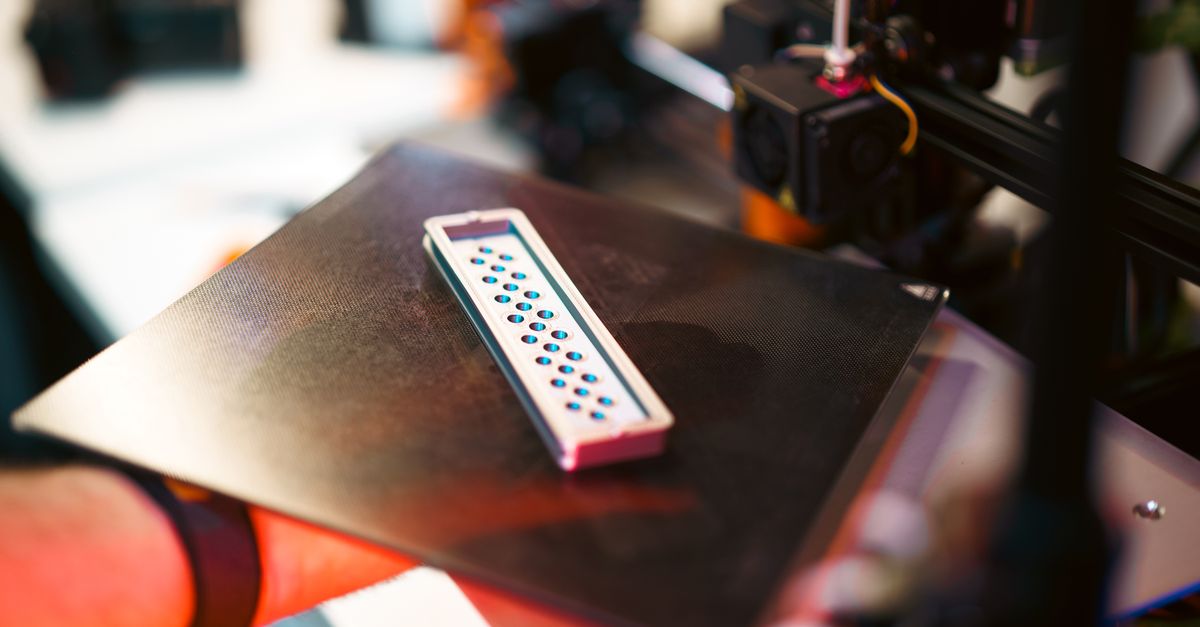
Photo by Jakub Zerdzicki on Pexels
When 3D Printing Beats Traditional Manufacturing

Manufacturing teams face a critical decision with every new part: which production method delivers the best combination of cost, speed, and quality? While traditional manufacturing methods like injection molding and CNC machining remain essential for many applications, 3D printing increasingly wins in specific scenarios. Understanding these sweet spots helps businesses make smarter production decisions.
Complex Geometries Without Added Cost
Traditional manufacturing charges premium prices for complexity. Every undercut, internal channel, or organic shape in a CNC-machined part requires additional setups, specialized tooling, or manual operations. A part with internal cooling channels might require drilling from multiple angles, then plugging access holes - adding hours of machine time and labor.
3D printing builds complexity layer by layer with no additional cost. A straight block and a part with intricate internal lattice structures take the same amount of material and print time if they occupy the same volume. This fundamentally changes design economics. Engineers can add functionality - like integrated wire guides, snap-fit features, or weight-reducing honeycomb structures - without worrying about machining access or tool clearances.
Consider drone components where weight reduction directly impacts flight time. Traditional machining might hollow out a motor mount through pocket milling, leaving thick walls where tools cannot reach. 3D printing enables variable wall thicknesses, removing material precisely where strength isn’t needed while maintaining rigidity where it matters.
Low Volume Production Economics
The math shifts dramatically below certain quantities. Injection molding offers unbeatable per-unit costs at high volumes, but the tooling investment creates a break-even point that many businesses never reach. A simple injection mold starts around $5,000. Complex molds with slides, lifters, or multiple cavities easily exceed $50,000.
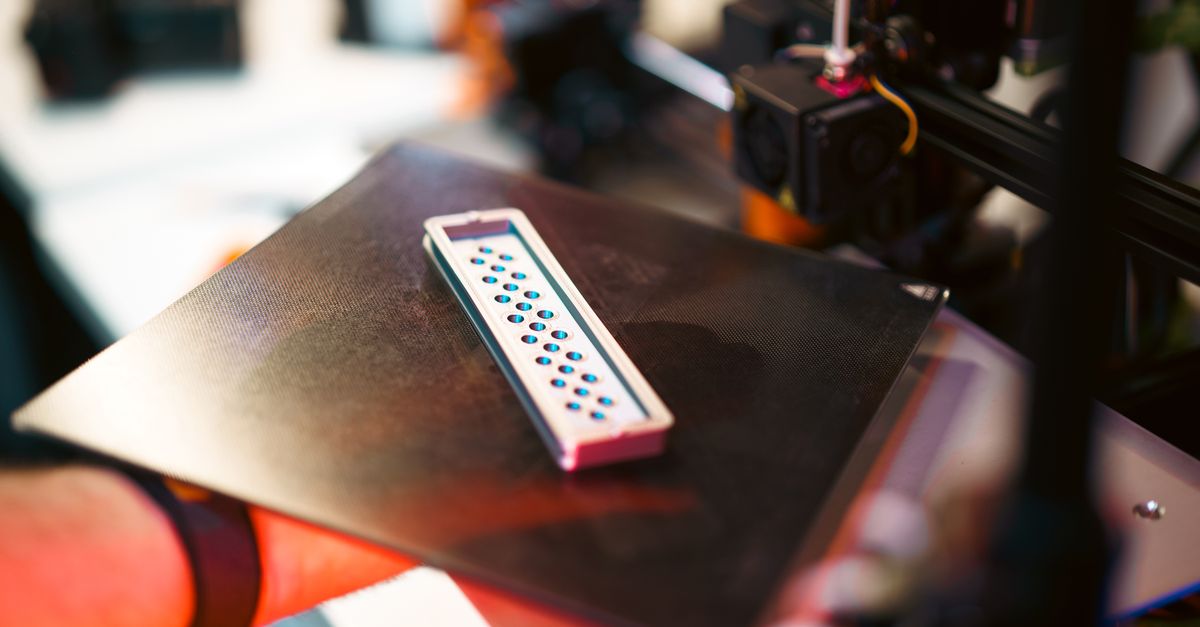
Photo by Jakub Zerdzicki on Pexels
At 10,000 units, that $5,000 mold adds only $0.50 per part. At 100 units, it adds $50 per part - often more than 3D printing the entire component. This calculation assumes you’ll actually need all those parts. Many products never reach projected volumes, leaving expensive molds collecting dust.
3D printing eliminates tooling costs entirely. Whether you need 10 prototypes or 500 production units, setup remains minimal. We see this frequently with businesses testing new product concepts. They can validate market demand with 50-100 units before committing to injection molding tooling.
Rapid Design Iteration
Speed compounds during development. When a CNC-machined prototype reveals a design flaw, the correction cycle involves CAD updates, new CAM programming, material procurement, machine setup, and cutting. Even simple changes consume days.
3D printing compresses this cycle to hours. Update the CAD file, slice it, and start printing. We routinely see development teams iterate through 5-6 design versions in the time traditional methods would deliver one. This acceleration particularly benefits products with tight market windows or regulatory deadlines.
The iteration advantage extends beyond prototypes. Small production runs benefit from continuous improvement. A manufacturer discovers their assembly team struggles with a particular snap-fit? Adjust the CAD model and implement the fix in tomorrow’s batch. Traditional tooling locks in design decisions for thousands of units.
Material Waste Reduction
Subtractive methods inherently waste material. CNC machining starts with a solid block and removes everything that isn’t your part. Complex aerospace brackets might remove 95% of the starting billet, turning expensive aluminum into recyclable chips. While chips have scrap value, the energy and resources consumed in producing, shipping, and processing that excess material represent pure waste.
3D printing builds only what you need, plus minimal support material. A complex bracket that would generate pounds of aluminum chips might use just ounces of PETG filament. This efficiency matters increasingly as businesses focus on sustainability metrics and material costs rise.
When Traditional Methods Still Win
Understanding limitations prevents costly mistakes. 3D printing cannot match injection molding’s sub-penny unit costs at high volumes. If you need 100,000 identical parts annually, invest in the mold. The surface finish straight from an FDM printer won’t match a polished mold cavity - though post-processing can close the gap for many applications.
Material selection remains broader in traditional manufacturing. While we print successfully in PLA, PETG, ABS, and occasionally nylon or TPU, CNC shops work in hundreds of metal alloys, engineering plastics, and composites. Tight tolerances below ±0.005” typically require machining, though 3D printing followed by light machining often provides the best economics.
Temperature resistance varies by process. Injection-molded PEEK handles extreme environments that would melt most 3D printing filaments. However, comparing material to material, 3D printed and injection molded parts from the same polymer perform similarly.
Hybrid Approaches Maximize Value
The smartest manufacturers combine methods. We frequently see successful hybrid strategies:
Print-to-Cast Patterns: 3D print complex patterns for investment casting, enabling metal parts with organic geometries impossible to machine. The printed pattern burns out during casting, leaving a precise metal component.
Machined Inserts: Print the complex plastic housing with precisely located pockets, then press-fit machined metal inserts for wear surfaces or threaded connections. This approach costs far less than machining the entire assembly.
Bridge Production: Use 3D printing for initial production while injection mold tooling is manufactured. This strategy captures early sales without delaying product launch for tooling.
Making the Right Choice
The decision matrix depends on multiple factors:
- Quantity needed: Below 500-1000 units (depending on part size), 3D printing often wins
- Design complexity: Internal features, undercuts, and organic shapes favor 3D printing
- Material requirements: High-temperature or specialized alloys point toward traditional methods
- Timeline pressure: Days versus weeks can make the decision obvious
- Iteration likelihood: Designs still evolving benefit from tooling-free production
Real Cost Comparisons
Consider a electronics enclosure, 4” x 3” x 2” with snap-fit features and internal component mounting bosses:
Injection Molding:
- Tooling: $8,000-12,000
- Per unit: $2-4
- Lead time: 6-8 weeks
- Minimum order: Often 1,000+
CNC Machining:
- Setup: $200-500
- Per unit: $45-80
- Lead time: 2-3 weeks
- Minimum order: 1
3D Printing (PETG):
- Setup: $0
- Per unit: $15-25
- Lead time: 3-5 days
- Minimum order: 1
At 100 units, total costs: injection molding ~$10,000, CNC ~$5,000, 3D printing ~$2,000. The winner shifts at different volumes, but many products never reach the break-even point for tooling investment.
Transform Your Manufacturing Decision Making
Smart manufacturers evaluate each part individually rather than defaulting to familiar methods. 3D printing excels for complex geometries, rapid iteration, and small to medium batches. Traditional manufacturing maintains advantages for high-volume, tight-tolerance, or extreme-environment applications.
Ready to explore how 3D printing fits your production needs? Our team analyzes your specific requirements - geometry, volume, timeline, and budget - to recommend the optimal approach. We’ll even help identify hybrid strategies that leverage the best of both worlds.
Start your project consultation today and discover which manufacturing method delivers the best results for your parts.
Related Resources
Related Articles
Waterproofing 3D Prints: Methods & Materials
Learn proven techniques to make FDM 3D printed parts waterproof for outdoor and liquid-contact applications.
3D Printing Validation Testing Guide
Master validation testing for 3D printed parts with dimensional checks, strength tests, and material verification methods.
Cost-Per-Part Calculator for 3D Printing
Master the hidden variables that determine your true 3D printing costs and make smarter sourcing decisions.