

Photo by Jakub Zerdzicki on Pexels
Batch Size Economics: The 3D Printing Advantage

Batch Size Economics: The 3D Printing Advantage
The sweet spot for 3D printing lies between prototype and mass production. While injection molding dominates at 10,000+ units and CNC machining excels for single precision parts, FDM 3D printing offers unmatched economics for batches of 10 to 500 units. Understanding these economics can transform how you approach small-scale manufacturing.
The Hidden Costs of Traditional Manufacturing
Traditional manufacturing methods carry setup costs that many businesses overlook when calculating per-unit pricing. Consider injection molding: tool creation alone typically runs $5,000 to $50,000 before producing a single part. For a run of 100 units, that translates to $50-500 per part just in tooling amortization.
CNC machining presents different challenges. While avoiding tooling costs, setup time for each unique part can consume 2-4 hours of machine time at $75-150 per hour. Programming, fixturing, and tool changes add overhead that makes small batches prohibitively expensive.
These fixed costs create what manufacturing engineers call the “valley of death” - production quantities too large for manual fabrication but too small to justify traditional automation.
Where 3D Printing Changes the Game
FDM 3D printing eliminates most setup costs. A properly configured print file can move from computer to production in minutes, not hours or weeks. This fundamental difference reshapes the economics of small-batch manufacturing.
Material efficiency drives additional savings. Unlike subtractive processes that turn raw material into chips, 3D printing uses only the material needed for the part plus minimal support structures. For complex geometries, material utilization can exceed 95%.
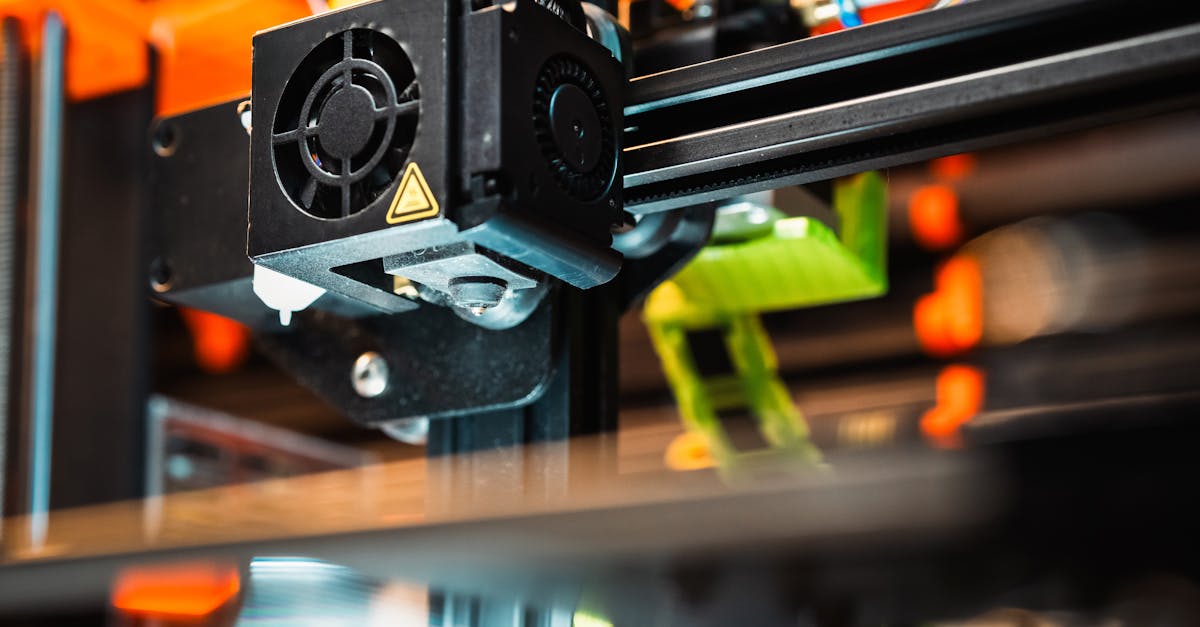
Photo by Jakub Zerdzicki on Pexels
The ability to run different parts simultaneously on multiple machines creates production flexibility impossible with traditional methods. A print farm can produce 20 different parts in the same timeframe a CNC shop would need to set up for just one.
Calculating Your Break-Even Point
To determine when 3D printing makes economic sense, consider these variables:
Setup costs: Traditional methods require tooling, programming, or fixture creation. 3D printing needs only file preparation - typically 30 minutes to 2 hours of design time.
Per-unit production time: Injection molding produces parts in seconds once tooling exists. CNC machining varies widely by complexity. 3D printing ranges from 2-24 hours depending on size and resolution requirements.
Material costs: Raw plastic pellets for injection molding cost less than 3D printing filament. However, minimum order quantities and waste factors often negate this advantage at small volumes.
Real-World Calculation Example
Consider a moderately complex bracket measuring 4” x 3” x 2”:
Injection Molding:
- Tooling: $15,000
- Unit cost: $2.50 materials + labor
- Lead time: 6-8 weeks
CNC Machining (from plastic block):
- Setup: $300
- Unit cost: $45 materials + machining time
- Lead time: 2-3 weeks
3D Printing (PETG):
- Setup: $0
- Unit cost: $12 materials + print time
- Lead time: 3-5 days
At 50 units, total costs compare as:
- Injection molding: $15,000 + (50 × $2.50) = $15,125
- CNC machining: $300 + (50 × $45) = $2,550
- 3D printing: $0 + (50 × $12) = $600
Design Freedom Amplifies Value
The economics improve dramatically when leveraging design freedom. Parts designed for 3D printing can consolidate assemblies, integrate features impossible to machine, and optimize material distribution for weight savings.
A single 3D printed part might replace a five-component assembly. This consolidation eliminates:
- Assembly labor
- Inventory management for multiple SKUs
- Potential failure points at connection interfaces
- Quality control steps between components
Industries from aerospace to medical devices increasingly specify 3D printing not for cost savings alone, but for performance improvements enabled by design freedom.
Speed-to-Market Considerations
Time value often outweighs pure production costs for new products. Waiting 6-8 weeks for injection molding tooling can mean missed market opportunities. 3D printing enables iterative development where design changes implement immediately without tooling modifications.
Bridge production becomes a strategic tool. Companies can launch products using 3D printed parts, validate market demand, then transition to traditional manufacturing if volumes justify the investment. This approach reduces risk while accelerating revenue generation.
Quality Factors in Economic Calculations
Surface finish requirements affect the economic comparison. Injection molded parts typically need no post-processing. 3D printed parts may require support removal, sanding, or vapor smoothing depending on application requirements.
However, modern FDM printers achieve dimensional tolerances of ±0.2mm for well-designed parts. For many applications, this meets functional requirements without secondary operations. Understanding when “good enough” truly is good enough can unlock significant cost savings.
Environmental and Inventory Benefits
Digital inventory transforms working capital requirements. Instead of maintaining physical stock, companies can store validated print files and produce on demand. This eliminates:
- Warehouse space costs
- Obsolescence risk
- Minimum order quantities that inflate inventory
The environmental impact calculation extends beyond material usage. Local production eliminates shipping emissions for replacement parts. On-demand manufacturing prevents overproduction waste. These factors increasingly influence procurement decisions as companies pursue sustainability goals.
Making the Strategic Choice
The optimal production method depends on multiple factors beyond unit cost:
Choose 3D printing when:
- Quantities range from 10-500 units annually
- Design iterations remain likely
- Customization adds value
- Lead time matters more than unit cost
- Complex geometries provide functional benefits
Transition to traditional methods when:
- Annual volumes exceed 500-1000 units
- Design has stabilized completely
- Surface finish requirements are critical
- Material properties demand specific polymers unavailable in filament form
Industry-Specific Applications
Different industries find varying break-even points based on their unique requirements:
Automotive aftermarket benefits from 3D printing for discontinued parts where tooling no longer exists. The alternative - custom machining - often costs 10x more than 3D printing for complex plastic components.
Medical device development leverages 3D printing through the entire development cycle. Prototype iterations, clinical trial devices, and even early commercial production often remain economical via 3D printing due to regulatory change requirements.
Industrial equipment manufacturers use 3D printing for replacement parts with unpredictable demand. Storing digital files instead of physical inventory for thousands of low-volume SKUs transforms service parts economics.
Future Economic Trends
As 3D printing technology advances, the economic crossover point continues shifting upward. Faster printers, lower material costs, and improved automation extend viability into higher volumes. Multi-material capabilities enable functional integration previously impossible, adding value beyond simple part replacement.
The question isn’t whether 3D printing will replace traditional manufacturing. Instead, smart manufacturers ask where 3D printing provides the best total value proposition considering speed, flexibility, and total system cost.
Ready to Calculate Your 3D Printing ROI?
Understanding batch size economics helps you make informed manufacturing decisions. Whether you need 10 units or 500, we can help you determine if 3D printing makes economic sense for your specific application. Our team analyzes your requirements and provides transparent pricing comparisons to traditional methods.
Start your project today and discover how 3D printing can transform your small-batch manufacturing economics.
Related Resources
Related Articles
Waterproofing 3D Prints: Methods & Materials
Learn proven techniques to make FDM 3D printed parts waterproof for outdoor and liquid-contact applications.
3D Printing Validation Testing Guide
Master validation testing for 3D printed parts with dimensional checks, strength tests, and material verification methods.
Cost-Per-Part Calculator for 3D Printing
Master the hidden variables that determine your true 3D printing costs and make smarter sourcing decisions.