
Photo by ThisIsEngineering on Pexels
Chemical Resistance of 3D Printed Plastics

A part that survives the drawing review can still fail in the field because of what it touches: cleaning solvents, cutting fluids, fuels, fertilizers, or even hand sanitizer. The chemical resistance of 3D printed parts is one of the most overlooked specs in additive manufacturing, and it is often discovered the hard way, when a bracket cracks or a housing turns tacky after a few weeks of use.
This guide explains how common FDM materials behave around chemicals, why printed parts differ from molded ones, and how to qualify a material before you order.
Why Does Chemical Resistance Matter for 3D Printed Parts?
Plastics are not chemically inert. Every thermoplastic has a list of substances that leave it alone and a list that soften, swell, craze, or dissolve it. The same polymer can handle a month of exposure to one chemical and fail in an hour with another.
Failure is often slow and quiet. Chemical attack does not always look like melting. Common failure modes include:
- Swelling. The plastic absorbs the chemical, grows slightly, and loses stiffness.
- Environmental stress cracking. A part under load (a snap-fit clip or a press-fit boss) develops fine cracks when exposed to a chemical it would otherwise tolerate unloaded.
- Surface softening or tackiness. The outer layer degrades, which affects fit, grip, and appearance.
- Embrittlement. The part looks fine but snaps under a load it used to handle easily.
Any application involving manufacturing tooling, automotive environments, outdoor equipment, or shop floors should treat chemical exposure as a design input, not an afterthought.
How Do the Common FDM Materials Compare?
The following is a general overview based on typical polymer behavior. Always confirm against the specific filament manufacturer’s data and test with your actual chemical, concentration, temperature, and duration. For a broader look at mechanical and thermal differences, see our PLA vs PETG vs ABS materials comparison.
PLA
PLA is the weakest choice for chemical exposure. It is a great material for prototypes, display pieces, and fit checks, but it is attacked by many common solvents, including acetone, ketones, and chlorinated solvents. It can also slowly degrade in hot, humid conditions through hydrolysis. Mild exposure to water, many oils, and dilute cleaners is often fine for short periods, but PLA is not the material to put in a chemical bath or near aggressive cleaners. Our PLA material guide covers where it shines.
PETG
PETG is a strong general-purpose option. It tolerates many dilute acids, alkalis, alcohols, and common household and shop cleaners better than PLA. It is a sensible default when parts will see occasional splashes, wipe-downs, or damp environments. It is still vulnerable to strong solvents such as ketones, and stress cracking is possible when a loaded part meets certain chemicals. See the PETG material guide for more.
ABS and ASA
ABS and ASA handle many oils, greases, and water-based chemicals, but not strong solvents. Acetone dissolves ABS, which is exactly why acetone vapor smoothing works as a finishing technique. That same property means ABS should stay away from ketones, esters, and many aromatic solvents in service. ASA behaves similarly to ABS chemically, with the added benefit of UV stability for outdoor parts. Details are in our ABS guide and ASA guide.
Nylon
Nylon is a go-to for oils, fuels, and hydrocarbons. Polyamides generally resist oils, greases, and many fuels well, which is why they show up in under-hood and industrial applications. The tradeoffs are that nylon absorbs moisture, which changes its dimensions and stiffness, and it is attacked by strong acids and some oxidizing agents. We can print nylon, though it is not one of our daily-driver materials. Read the nylon guide for handling details.
TPU
Flexible TPU tends to resist oils and greases well, with performance varying by grade (polyester versus polyether based). It is a reasonable choice for seals, gaskets, and protective boots where oil contact is expected. See the TPU guide.
Why Do Printed Parts Behave Differently Than Molded Ones?
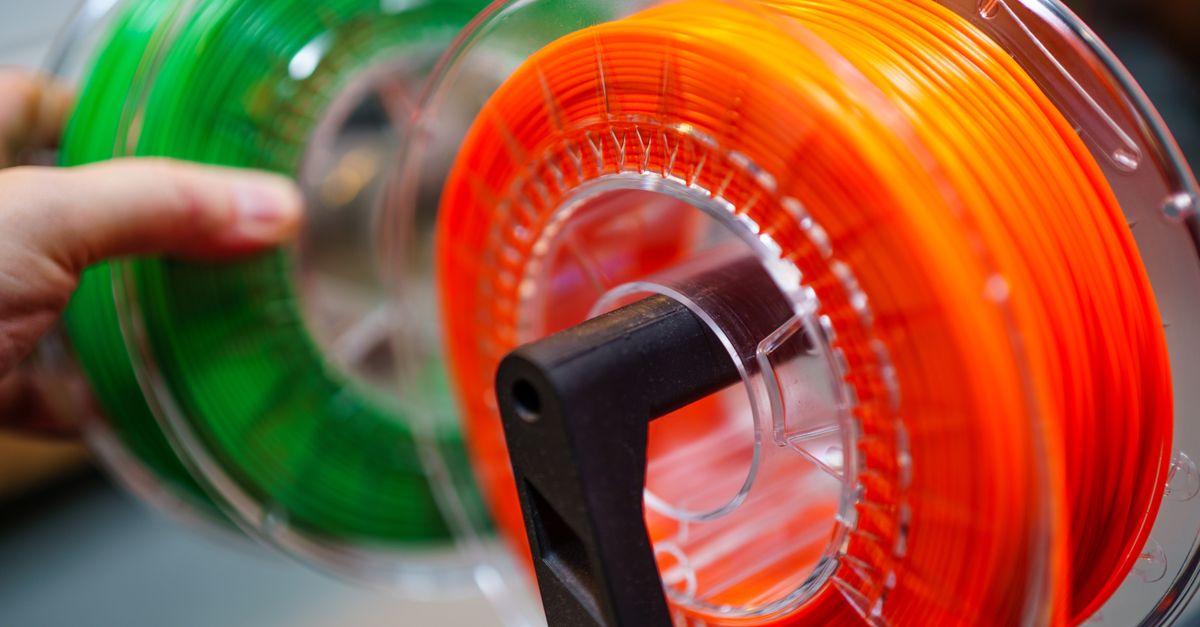
Photo by Jakub Zerdzicki on Pexels
Layer lines create surface area and pathways. A data sheet for a polymer describes a solid, fully dense molded specimen. An FDM part is built from extruded beads with tiny gaps between them, so there is far more exposed surface and the possibility of liquids wicking between layers. A chemical that a molded part shrugs off may work its way into a printed part’s interior.
Layer bonding is the weak link. Chemicals and stress concentrate at the interfaces between layers. If the part is loaded across those layers, as discussed in our part orientation guide, chemical exposure makes the weakness worse.
Infill and wall count change the risk. More perimeters and a denser outer shell reduce the volume of material directly exposed to fluids. Parts that need to resist penetration should be designed with thicker walls rather than relying on low-infill interiors.
Print quality matters. Under-extrusion, poor layer adhesion from cold printing, and moisture in the filament all create voids and weak bonding. Consistent temperature control, covered in our FDM temperature control article, directly affects how well a part holds up.
What Can You Do to Improve Chemical Resistance?
Choose the material for the chemical, not just the strength. Start with what the part touches and work backward. A material with lower mechanical specs but better chemical compatibility is often the right call.
Design thicker walls and fewer stress concentrations. Sharp internal corners, thin clips, and tight press fits are where stress cracking begins. Generous fillets, more perimeters, and lower preloads all help. Our design rules that save money on 3D prints cover many of these fundamentals.
Seal or coat when appropriate. Sealing the surface can reduce penetration between layers. Methods and tradeoffs are discussed in our waterproofing guide. Keep in mind that a coating must itself be compatible with the chemical, and it can wear off at contact points.
Limit exposure time and temperature. Resistance charts are usually based on specific temperatures. Heat accelerates chemical attack, so a part that tolerates a coolant at room temperature may not tolerate it near a warm motor.
Plan for replacement. For many shop-floor applications, a printed part is a consumable. If a fixture costs a few dollars to reprint, accepting gradual chemical wear and swapping on a schedule can be more economical than moving to a more exotic material.
How Should You Test Before Committing?
Run a soak test on printed coupons. Print small samples in the actual candidate material, using the same settings and orientation planned for production. Submerge or wipe them with the real chemical at realistic concentration and temperature, and compare against an untouched control.
Check more than appearance. After exposure, look for changes in weight, dimensions, surface feel, and flex behavior. If the part will be loaded in service, test it under load while exposed, since stress cracking will not show up in a simple dip test.
Test the geometry, not just the material. A thin clip and a thick block behave differently. If you are running a pilot, a quick rapid prototyping round in two or three materials is an inexpensive way to find out which one holds up. For more structured approaches, see our validation testing guide.
Where Does This Show Up in Real Applications?
Shop and production environments. Jigs, fixtures, and gauges often live near cutting fluids, degreasers, and cleaning agents. If you are building manufacturing tooling and fixtures, chemical compatibility should be on the requirements list alongside dimensions.
Automotive and restoration work. Parts near fuel, oil, brake fluid, and cleaners need materials chosen with those fluids in mind. Our automotive and classic car restoration work involves this kind of material selection regularly.
Production runs. When you are moving into small-batch production, a chemical compatibility problem multiplied across a few hundred units gets expensive fast. Validating before the run is cheap insurance.
Choosing the Right Material for Your Application
There is no single best plastic for every chemical environment. PETG is a strong starting point for general splash and wipe-down exposure. ABS or ASA suit oils and outdoor use where solvents are not present. Nylon and TPU make sense around oils and fuels. PLA is best kept to prototypes and dry, benign environments. We print in PLA and PETG daily, run ABS periodically, and can handle ASA, nylon, TPU, and carbon fiber composites when an application calls for them.
The most useful thing you can bring to a quote request is the list of chemicals, temperatures, and durations the part will see. With that, we can recommend a material and a design approach that fits.
Tell Us What Your Part Will Be Exposed To
If you are planning a part that will contact fluids, cleaners, or fuels, send us the details and we will help you choose a material and run it through a realistic test plan. Start a custom order and include the chemical exposure in your project notes.
Related Reading
Related Articles
Creep in 3D Printed Parts: Why Plastic Sags
Creep in 3D printed parts is slow deformation under constant load. Learn which materials resist it and how to design parts that keep their shape.
Reverse Engineering Broken Parts for 3D Printing
Reverse engineering parts for 3D printing turns a worn or obsolete component into a usable CAD model. Here is the workflow and the pitfalls to avoid.
Designing Snap Fits for FDM 3D Printing
Snap-fit design for FDM comes down to strain, orientation, and clearance. Here is how to build snap fits in PLA and PETG that do not crack.