
Photo by Jakub Zerdzicki on Pexels
Creep in 3D Printed Parts: Why Plastic Sags

A part can pass every test on day one and still fail in month three. The usual culprit is creep in 3D printed parts: the slow, permanent deformation that happens when plastic carries a steady load over time. A shelf bracket that looks perfect when installed starts to droop. A clamp loses its grip. A screw boss slowly loosens. Nothing snapped, nothing was overloaded, yet the part no longer does its job.
Creep rarely shows up in a quick prototype review, which is why it catches businesses off guard when a prototype moves into real service. This post explains what creep is, which materials resist it best, and how to design and specify parts so they hold their shape.
What Is Creep, and Why Does It Matter for FDM Parts?
Creep is time-dependent deformation under constant stress. Unlike a one-time overload, creep happens at loads well below the point where a part would break or visibly bend if you pushed on it briefly. Thermoplastics are viscoelastic, which means they behave partly like a spring and partly like a very thick fluid. Under sustained load, the polymer chains slowly slide past one another, and the part gradually takes a permanent set.
Three factors drive how fast this happens:
- Stress level. Higher sustained stress means faster creep.
- Temperature. This is the big one. Creep accelerates sharply as a plastic approaches its glass transition temperature (Tg).
- Time. The deformation keeps accumulating. A part that moved a fraction of a millimeter in the first week may keep moving for months.
FDM parts add a wrinkle. Because they are built layer by layer, the bonds between layers are usually the weakest link. A load that pulls layers apart, or that shears across them, will creep sooner than one carried along the continuous strands of plastic within a layer.
Which Materials Resist Creep Best?
The glass transition temperature is a useful rough guide. Below Tg, the polymer is stiff and glassy. As temperature approaches it, the material softens and creep speeds up dramatically. Approximate Tg values for common FDM materials:
- PLA: roughly 55 to 60 C (131 to 140 F)
- PETG: roughly 75 to 80 C (167 to 176 F)
- ABS and ASA: roughly 100 to 105 C (212 to 221 F)
These are ballpark figures that vary by manufacturer and formulation, but the ordering holds. PLA is the most creep-prone of the group, PETG is noticeably better, and ABS and ASA are better still.
PLA is excellent for stiffness, not for sustained load. It is rigid, prints cleanly, and is our go-to for many prototypes and display pieces. But PLA can creep even at room temperature under steady stress, and it gets worse quickly in warm environments. For a part that will hang, clamp, or hold tension for months, we usually steer people toward something else. Our PLA guide covers where it shines.
PETG is a practical middle ground. With a higher Tg and better layer adhesion than PLA, PETG handles sustained loads more gracefully and is one of the two materials we print in most often. See our PETG guide for details.
ABS and ASA are the step up for heat and load. When parts will sit in warm enclosures, vehicles, or outdoor locations, the higher Tg gives real headroom. We run ABS periodically, and our ABS guide and ASA guide explain the tradeoffs. For the most demanding jobs, we can also print in nylon and carbon fiber composites, which can offer better long-term stiffness for the right application. They are capabilities we offer on request rather than our daily drivers.
For a broader comparison, see PLA vs PETG vs ABS: Materials Compared.
Why Does Heat Make Creep So Much Worse in Charlotte?
Think about where parts actually live. A car interior in a Carolina summer can climb well past 60 C (140 F) on a hot day, with dashboards and surfaces in direct sun even hotter. A warehouse mezzanine, a metal shed, an equipment cabinet next to a motor, or a drone payload bay in the sun can all push a plastic part toward its Tg.
A PLA part that behaves fine in an air-conditioned office may sag within weeks in one of those spots. The material did not change, but the margin between operating temperature and Tg collapsed.
Photo by Jakub Zerdzicki on Pexels
Specify the worst-case temperature, not the average. When you request a part, tell us the hottest environment it will see, including shipping, storage, and parked-vehicle scenarios. That single piece of information often decides the material.
How Do You Design Parts to Resist Creep?
Material selection is half the answer. The other half is geometry and load path. These design habits make a measurable difference.
Keep Sustained Stress Low
Design sustained loads at a small fraction of short-term strength. A common engineering rule of thumb for plastics under long-term load is to keep stress well below the material’s short-term strength, often a small fraction of it. The right number depends on material, temperature, and service life, so treat any rule of thumb as a starting point and confirm with testing. If a part only barely survives a push test, it will not survive years of steady load.
Add Cross-Section Where It Counts
Thicker sections and ribs reduce stress. Because stress equals force divided by area, increasing the cross-section lowers the stress for the same load. Ribs and gussets add stiffness without much material. Our design rules that save money cover how to do this without inflating print time.
Orient the Part for the Load
Put the load along the layers, not across them. Layer interfaces are the weak plane in FDM. A hook printed standing up, with layers stacked along the direction of pull, is asking the layer bonds to carry tension and will creep and fail sooner. Printing it so the load runs along continuous strands is far better. We go deeper in Part Orientation Magic.
Favor Walls Over Infill
Perimeters carry most of the load. Adding wall count usually improves long-term performance more than raising infill percentage. Infill vs Walls breaks down why.
Protect Fastened Joints
Clamp load relaxes over time. A screw squeezing plastic will gradually lose preload as the plastic creeps under the head or washer. Three habits help:
- Use washers or flanged fasteners to spread the load over a larger area.
- Use metal compression limiters or sleeves where a bolt must stay tight.
- Use heat-set inserts for threads that see repeated assembly, and check the joint after the first thermal cycles.
Avoid Holding Snap Fits in Deflection
A snap fit that stays flexed will creep. Cantilever latches work well when they flex briefly and return to rest. If the latch sits deflected for its whole service life, it will take a set and lose retention force. See Designing Snap Fits for FDM 3D Printing for strain limits and geometry.
Can Annealing Help?
Thermal annealing, which means heating a printed part below its melting point and letting it cool slowly, can increase crystallinity in some materials and improve heat resistance. It is most often discussed for PLA. The tradeoff is dimensional change: parts typically shrink or warp by some amount, and the change is not always uniform. For tight-tolerance parts, that can be a dealbreaker. If annealing is part of your plan, design the part with the expected shrinkage in mind and verify it on samples first. Switching to a higher-Tg material is often the simpler, more predictable path.
How Do You Verify a Part Will Not Creep?
Test under realistic sustained load and temperature. A drop test or a quick load check will not reveal creep. A simple, effective approach:
- Load a sample at the expected service stress, using a weight, spring, or fixture.
- Hold it at the worst-case temperature, using an oven or heated chamber for accelerated checks.
- Measure deflection with a gauge or calipers at intervals.
- Compare against your allowable deformation.
Elevated temperature compresses the timeline, but it is not a perfect substitute for real service life, so use it to rank materials and designs rather than to promise a specific lifespan. Our validation testing guide and prototype testing methods walk through building a test plan, and a rapid prototyping round in two candidate materials is a cheap way to see the difference before committing to a batch.
Where Does Creep Matter Most?
A few common areas where we see sustained-load risk:
- Fixtures and clamps. Parts that hold workpieces under constant clamping force need stable geometry. See our manufacturing tooling and fixtures service and Fixtures and Jigs for Manufacturing Teams.
- Mounting brackets and hangers. Anything that supports weight over months or years.
- Enclosures with screw bosses. Repeated thermal cycling plus clamp load is a recipe for loosening.
- Vehicle and drone components. Heat and vibration combine with steady loads. Our automotive restoration and drone and UAV parts work frequently calls for higher-Tg materials for this reason.
Get the Material and Design Right the First Time
Creep is predictable once you know to look for it. The recipe is simple: know the worst-case temperature, pick a material with real margin below its Tg, keep sustained stress low, orient layers along the load, and protect fastened joints. If you are not sure how a part will behave over time, our custom design services can help you adjust the geometry before you print.
Tell Us About Your Application
Send us your part, the load it will carry, and the hottest place it will live. We will recommend a material and print strategy that fits, and we can run comparison samples if you want proof before a larger order. Start a quote at /custom-order.
Related Reading
Related Articles
Reverse Engineering Broken Parts for 3D Printing
Reverse engineering parts for 3D printing turns a worn or obsolete component into a usable CAD model. Here is the workflow and the pitfalls to avoid.
Designing Snap Fits for FDM 3D Printing
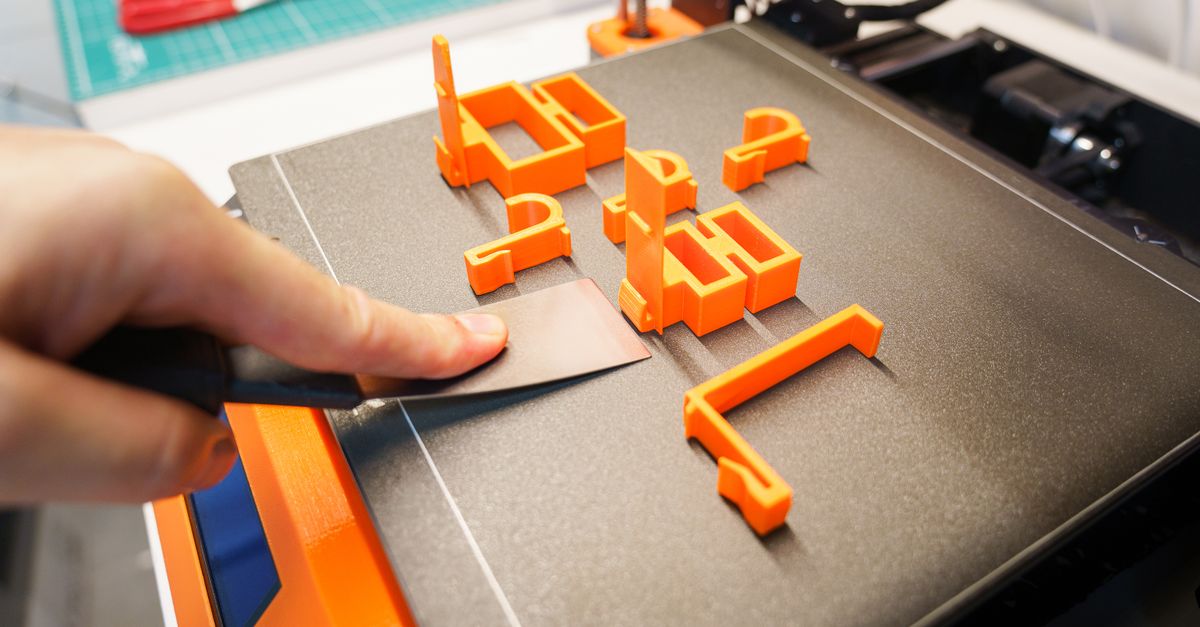
Snap-fit design for FDM comes down to strain, orientation, and clearance. Here is how to build snap fits in PLA and PETG that do not crack.
Infill vs Walls: What Makes 3D Prints Strong
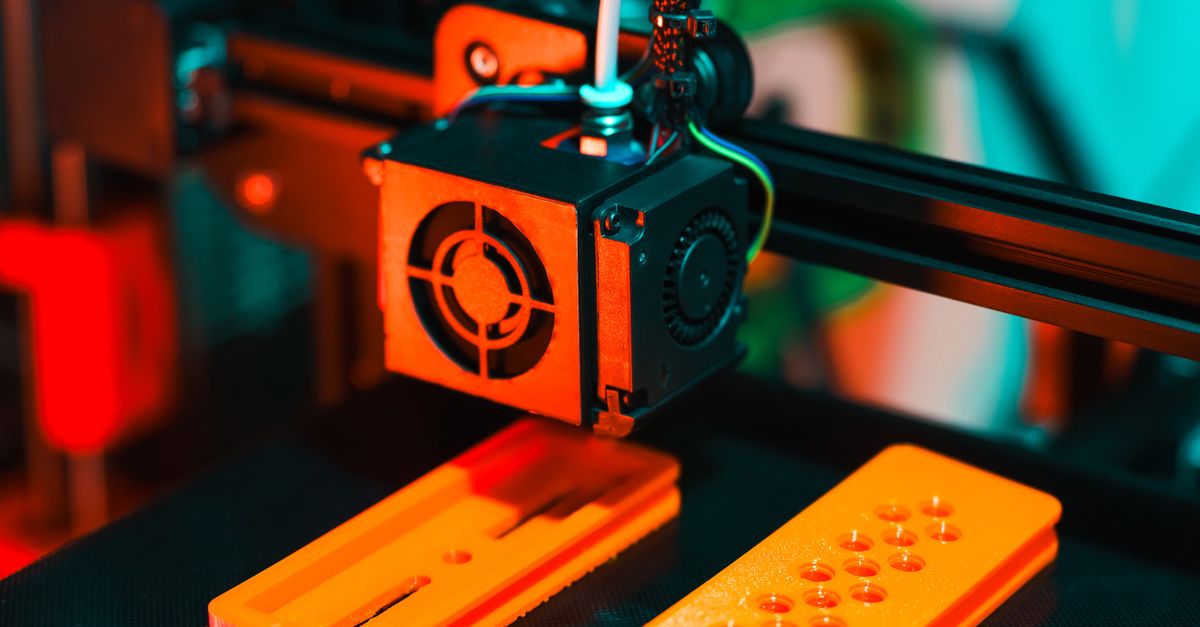
3D print strength depends more on walls, orientation, and material than on infill percentage. Here is how to spec parts that hold up without overpaying.