
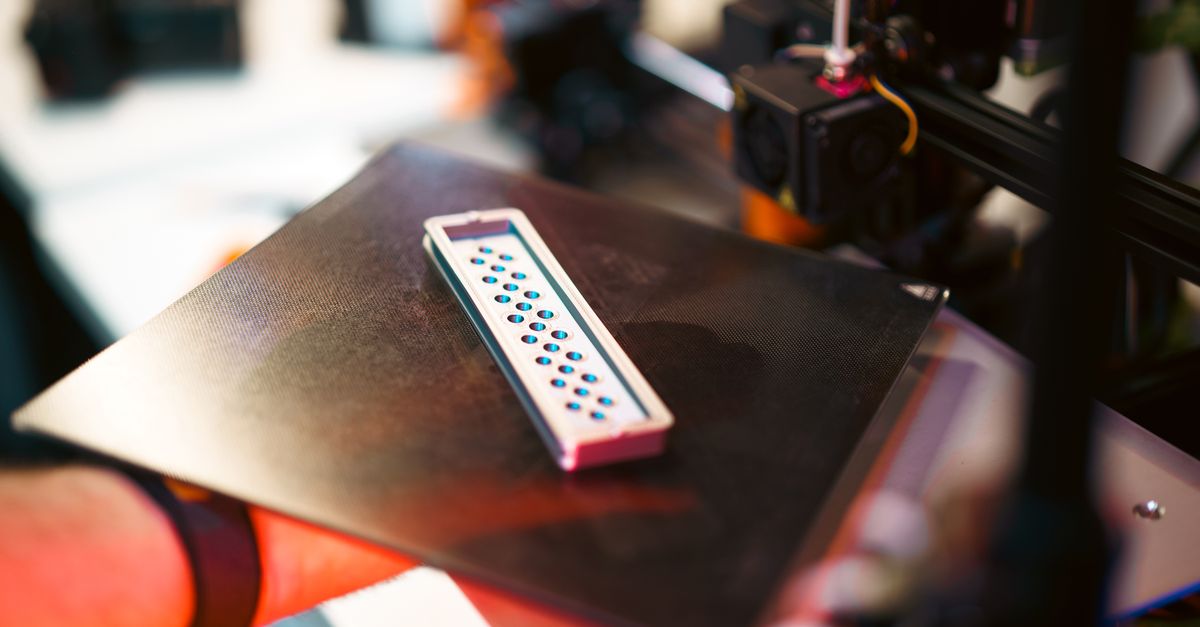
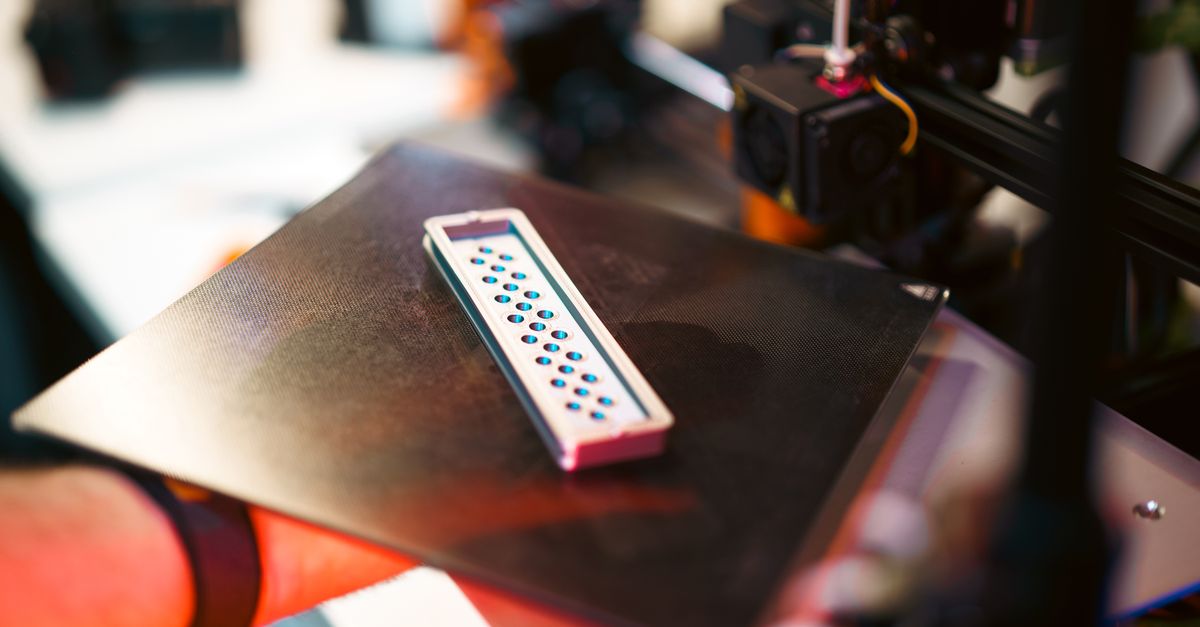
Photo by Jakub Zerdzicki on Pexels
Disclaimer Guide for 3D-Printed Parts

If you’re selling or distributing 3D-printed parts, whether as a service provider or manufacturer, having a comprehensive disclaimer for 3d printed items isn’t just recommended, it’s essential for protecting your business. Over the past five years, we’ve refined our disclaimers based on real-world experience with thousands of parts across dozens of industries. This guide will help you understand what to include in your 3d print disclaimer and provide templates you can adapt for your business.
Why Do You Need a Disclaimer on 3D Printed Parts?
Legal protection starts with clear communication. Unlike injection molded or machined parts, 3D-printed components have unique characteristics that customers need to understand. Layer adhesion, material properties, and manufacturing tolerances all differ from traditional manufacturing methods. A well-crafted 3d printing service disclaimer sets expectations and protects both parties from misunderstandings.
The additive manufacturing industry is maturing rapidly, with new regulations and standards emerging regularly. As more businesses integrate 3D-printed parts into critical applications - from drone components to automotive restoration parts - the need for comprehensive disclaimers has never been greater.
Material Limitations: What Your Disclaimer Must Address
Every 3D printing material has specific limitations that should be clearly stated in your disclaimer for 3d printed items. Here’s what we include for our most common materials:
Temperature resistance varies significantly between materials. PLA parts begin to deform at 60°C (140°F), making them unsuitable for automotive interiors or outdoor summer use. PETG handles up to 80°C, while ABS and ASA can withstand 100°C or more. Your disclaimer should specify maximum operating temperatures.
UV degradation affects most 3D printing materials. Standard PLA and ABS will become brittle and discolored with prolonged sun exposure. Only ASA and certain specialty filaments offer true UV resistance. We always note expected outdoor lifespan in our disclaimers.
Chemical compatibility matters for industrial applications. Nylon parts absorb moisture and many chemicals, while PETG resists most acids but fails with acetone. Your 3d print disclaimer should list incompatible chemicals and environments.
Photo by Ruslan Alekso on Pexels
Tolerance and Accuracy Expectations
Dimensional accuracy in FDM printing typically ranges from ±0.2mm to ±0.5mm. This varies based on part geometry, material, and printer calibration. For resin printing, we achieve ±0.1mm or better, but post-processing can affect final dimensions.
Your disclaimer on 3d printed parts should specify:
- Expected dimensional tolerances for each material
- How part orientation affects accuracy
- Post-processing impacts (sanding, vapor smoothing, etc.)
- Shrinkage rates for materials like Nylon and ABS
Surface finish expectations prevent customer disappointment. FDM parts show visible layer lines - typically 0.1mm to 0.3mm layer height. While post-processing can improve appearance, the layered structure remains inherent to the technology. Set clear expectations about aesthetics versus functionality.
Safety Warnings and Usage Guidelines
A comprehensive 3d printing service disclaimer must address safety considerations:
Food safety requires special attention. While some filaments are FDA-approved for food contact, the 3D printing process creates microscopic gaps where bacteria can grow. We explicitly state that standard 3D-printed parts are not food-safe without appropriate coatings or post-processing.
Mechanical stress limitations protect end users. 3D-printed parts have anisotropic properties - they’re weaker along layer lines than across them. Critical applications require careful orientation and may need safety factors of 3-5x compared to injection molded parts.
Age-appropriate warnings for consumer products. Small parts, sharp edges from support removal, and potential brittleness all require clear warnings, especially for items that might be used by children.
Template Disclaimer for 3D-Printed Parts
Here’s a template disclaimer for 3d printed items that you can adapt:
DISCLAIMER FOR 3D-PRINTED PARTS
These parts are manufactured using additive manufacturing (3D printing) technology and have characteristics that differ from traditionally manufactured components:
MATERIAL PROPERTIES
- Parts are produced in [MATERIAL NAME] with a maximum service temperature of [TEMP]°C
- UV exposure will cause degradation over time unless specifically treated
- Chemical resistance limited to: [LIST COMPATIBLE CHEMICALS]
- Not suitable for: [LIST INCOMPATIBLE CHEMICALS/ENVIRONMENTS]
DIMENSIONAL TOLERANCES
- Standard tolerance: ±0.X mm or ±X%, whichever is greater
- Holes may print 0.1-0.2mm undersized
- Post-processing may affect final dimensions
STRUCTURAL LIMITATIONS
- Parts exhibit anisotropic properties with reduced strength along layer boundaries
- Not suitable for safety-critical applications without engineering review
- Recommended safety factor: 3-5x for load-bearing applications
- Impact resistance lower than injection molded equivalents
USAGE RESTRICTIONS
- Not certified for food contact without appropriate coating
- Not suitable for medical implantation or prolonged skin contact
- Keep away from open flames and high heat sources
- Small parts may present choking hazard
LIABILITY Customer assumes all responsibility for determining suitability for intended application. Parts are provided as-is without warranty of fitness for particular purpose.
Industry-Specific Disclaimer Requirements
Different industries require tailored disclaimers. Here’s what we include for specific applications:
For automotive and restoration parts: We specify that 3D-printed parts are for vintage/classic vehicles only and not DOT-approved for modern vehicle safety systems. Temperature ratings and chemical compatibility with automotive fluids are explicitly stated.
For drone and UAV components: Our disclaimer addresses vibration resistance, balance requirements, and the need for pre-flight inspection. We note that TPU parts may require more frequent replacement than rigid components.
For manufacturing fixtures and tooling: We include cycle count estimates, noting that 3D-printed fixtures typically last 1,000-10,000 cycles depending on material and application, compared to 100,000+ for machined aluminum.
Updating Your Disclaimers: Best Practices
Review disclaimers quarterly as materials and capabilities evolve. New materials enter the market regularly, each with unique properties requiring specific warnings. What was accurate last year may need updating today.
Document customer feedback and issues. When customers report unexpected failures or misunderstandings, update your disclaimer to address these scenarios. Real-world experience provides the best guidance for comprehensive protection.
Consider legal review for high-liability applications. While template disclaimers provide a starting point, applications involving safety, medical adjacency, or significant financial risk warrant professional legal consultation.
Balancing Protection with Customer Confidence
A well-written 3d print disclaimer protects your business while building customer trust through transparency. Customers appreciate understanding exactly what they’re receiving and how to use it safely. This transparency often leads to better applications of 3D printing technology and fewer disappointed customers.
Remember that disclaimers complement, not replace, good communication throughout the project. Discussing limitations during quoting, design review, and delivery ensures customers make informed decisions about using 3D printing versus traditional manufacturing.
Take the Next Step
Need help crafting disclaimers for your 3D-printed parts or want to ensure your parts meet industry standards? Our team at CLT 3D Printing has experience across dozens of industries and can help you navigate the technical and legal considerations of additive manufacturing. We provide comprehensive documentation with every order, including material data sheets and application-specific disclaimers.
Contact us today to discuss your project requirements and learn how professional 3D printing services can accelerate your product development while managing risk appropriately.
Related Resources
Related Articles
Waterproofing 3D Prints: Methods & Materials
Learn proven techniques to make FDM 3D printed parts waterproof for outdoor and liquid-contact applications.
3D Printing Validation Testing Guide
Master validation testing for 3D printed parts with dimensional checks, strength tests, and material verification methods.
Cost-Per-Part Calculator for 3D Printing
Master the hidden variables that determine your true 3D printing costs and make smarter sourcing decisions.