
Photo by Somogro Bangladesh on Pexels
First-Article Inspection for 3D Printed Parts

First-Article Inspection for 3D Printed Parts
First-article inspection (FAI) stands as the gateway between prototyping and production in 3D printing. Whether you’re transitioning from traditional manufacturing to additive or scaling up from single prototypes to batch runs, understanding FAI for 3D printed parts determines success or expensive rework.
The stakes are real. A manufacturer switching from machined aluminum brackets to 3D printed PETG versions needs confidence that every critical dimension meets specification. A product developer preparing for a 100-unit production run can’t afford to discover tolerance issues after printing unit 50. First-article inspection provides that confidence through systematic verification.
What Makes 3D Printed FAI Different?
Traditional FAI procedures developed around machined and molded parts don’t always translate directly to 3D printing. The layer-by-layer construction introduces unique considerations that inspection protocols must address.
Material behavior varies by process. FDM parts exhibit different shrinkage patterns than resin prints. A PETG part might measure perfectly at room temperature but expand beyond tolerance at 60°C operating temperature. Your FAI process needs to account for the specific material properties of your chosen printing method.
Geometric complexity changes the game. 3D printing enables internal channels, lattice structures, and organic geometries impossible with traditional manufacturing. Measuring a simple machined block differs vastly from verifying the wall thickness of an internal cooling channel. Modern FAI for 3D printed parts often requires destructive testing of sacrificial units or advanced imaging techniques.
Essential Measurements for 3D Printed Parts
Not every dimension on your CAD model needs inspection, but identifying critical features determines product function and assembly success.
Dimensional Accuracy
Start with overall dimensions and critical mating surfaces. Use digital calipers for external measurements and pin gauges for holes. Remember that FDM parts typically show 0.1-0.2% shrinkage in PLA and up to 0.5% in ABS. Document actual versus nominal dimensions for every critical feature.
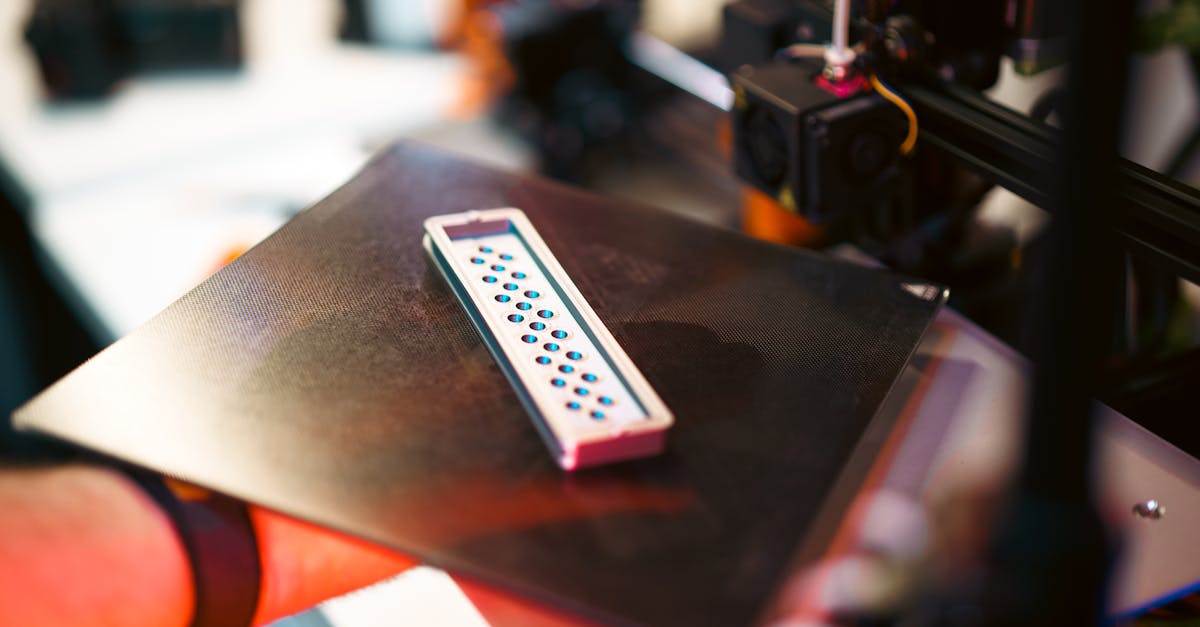
Photo by Jakub Zerdzicki on Pexels
Wall Thickness Verification
Minimum wall thickness often determines part strength. For FDM printing, walls under 1.2mm (3 perimeter widths at 0.4mm nozzle) lack structural integrity. Use ultrasonic thickness gauges for non-destructive testing or section one part for direct measurement. This becomes critical for parts replacing injection molded components where uniform wall thickness was assumed.
Surface Finish Standards
Define acceptable surface roughness for functional surfaces. FDM parts show clear layer lines - typically 0.1-0.3mm layer height produces 20-60 micron Ra surface roughness. Specify which surfaces require post-processing and establish visual standards using reference samples.
Documentation That Drives Consistency
FAI without proper documentation wastes everyone’s time. Your inspection reports create the quality baseline for every subsequent part.
Inspection Report Structure
Build your FAI report to capture both pass/fail results and process insights. Include:
- Part identification (name, revision, material, print settings)
- Environmental conditions (temperature, humidity during printing and measurement)
- Measurement tools used with calibration dates
- Actual measurements versus tolerances
- Photos of critical features and any defects
- Disposition (accept, conditional accept with deviations, reject)
Deviation Management
Not every out-of-spec dimension kills functionality. Document acceptable deviations based on actual use requirements. A mounting hole measuring 5.1mm instead of 5.0mm might work perfectly with proper fastener selection. Establish deviation limits during FAI rather than discovering them during assembly.
Tools and Techniques for Accurate Measurement
The right measurement tools make FAI efficient and repeatable. While aerospace manufacturers might use coordinate measuring machines (CMMs), most 3D printed parts verify successfully with standard metrology tools.
Basic Tool Kit
- Digital calipers (0.01mm resolution minimum)
- Pin gauge sets for hole verification
- Height gauge for Z-axis features
- Surface plate for flatness checks
- Feeler gauges for gap measurement
- Thread gauges for printed threads
Advanced Options
When basic tools fall short, consider:
- Optical comparators for profile tolerance
- 3D scanning for complex geometry
- CT scanning for internal features (service bureaus offer this)
- Photogrammetry for large parts
Common Pitfalls in 3D Printed Part Inspection
Experience teaches what the textbooks miss. These issues surface repeatedly in FAI for 3D printed components.
Measuring too soon causes false failures. FDM parts need 24 hours to fully stabilize after printing. Measure a PETG part immediately off the build plate and dimensions appear oversize. The material continues to contract as internal stresses relax. Schedule FAI after appropriate conditioning time.
Temperature compensation matters more than expected. A part printed at 25°C ambient but measured in a 15°C inspection room shows significant deviation. For critical tolerances under ±0.1mm, control measurement environment or apply temperature compensation calculations.
First layer compression skews results. The first layer of any FDM print compresses against the build surface, creating a lip or elephant’s foot effect. Don’t measure overall height from this surface - use the second layer or design in a measurement datum above the first layer.
Building Your FAI Process
Creating an effective FAI process for 3D printed parts doesn’t require aerospace-level complexity. Focus on repeatability and continuous improvement.
Start Simple
Begin with critical functional dimensions only. As you gain experience, expand to include secondary features. A mounting bracket might only need four hole locations and overall dimensions verified initially.
Create Reference Standards
Keep a golden sample. After successful FAI, preserve one part as a physical reference. This beats any amount of documentation when training new inspectors or troubleshooting production issues.
Iteration Improves Everything
Your first FAI procedure won’t be perfect. Each production run teaches something new about measurement techniques, tool selection, or documentation needs. Build revision control into your procedures from day one.
When to Perform First-Article Inspection
FAI timing impacts both cost and quality. These triggers indicate when fresh inspection adds value:
- New part design or significant revision
- Material change (even PLA to PLA+ warrants verification)
- Printer change or major maintenance
- Print parameter modifications
- Supplier change for printing services
- Extended production gaps (revalidate after 30+ days)
- Customer requirement (many specify FAI frequency)
Industry-Specific Considerations
Different industries emphasize different aspects of FAI. Understanding these variations helps tailor your approach.
Automotive and Aerospace
These industries live by AS9102 or PPAP requirements. Even for 3D printed prototypes, following established standards simplifies eventual transition to production. Focus on comprehensive documentation and measurement uncertainty calculations.
Medical Device Components
Biocompatibility drives material selection, but dimensional accuracy enables function. FAI for medical applications often includes additional validation of material lot traceability and print parameter recording.
Consumer Products
Cost sensitivity means balancing thorough inspection with practical limits. Statistical sampling often replaces 100% inspection. Define critical versus non-critical dimensions clearly to optimize inspection time.
Making FAI Work for Small Batch Production
Small batch production presents unique FAI challenges. You can’t amortize extensive inspection over thousands of units, but quality still matters.
Sample smartly. For 50-unit runs, inspect first article, middle article (unit 25), and last article. This catches both startup issues and drift over time. For critical applications, increase sampling to 10% or follow customer requirements.
Batch documentation efficiently. Create inspection sheets that capture multiple parts on one form. Use go/no-go gauges where possible to speed checks. Digital calipers with data output streamline recording.
Looking Forward: FAI Evolution
As 3D printing matures, FAI processes evolve alongside. In-process monitoring increasingly supplements traditional post-print inspection. Some industrial 3D printing services already incorporate layer-by-layer imaging and automatic dimensional verification.
The fundamentals remain constant. Whether you’re using manual calipers or automated optical inspection, FAI succeeds through systematic approach, appropriate documentation, and continuous improvement. Master these basics before chasing advanced technology.
Get Your Parts Right the First Time
First-article inspection might seem like overhead for prototype parts, but it’s an investment in doing things right. Whether you’re validating a new custom design or preparing for production, proper FAI prevents expensive surprises.
Need parts that pass inspection the first time? We understand the critical dimensions and specifications that matter for your application. Start your project with confidence - our systematic approach to quality begins with design review and continues through final inspection.
Further Reading
Related Articles
Waterproofing 3D Prints: Methods & Materials
Learn proven techniques to make FDM 3D printed parts waterproof for outdoor and liquid-contact applications.
3D Printing Validation Testing Guide
Master validation testing for 3D printed parts with dimensional checks, strength tests, and material verification methods.
Cost-Per-Part Calculator for 3D Printing
Master the hidden variables that determine your true 3D printing costs and make smarter sourcing decisions.