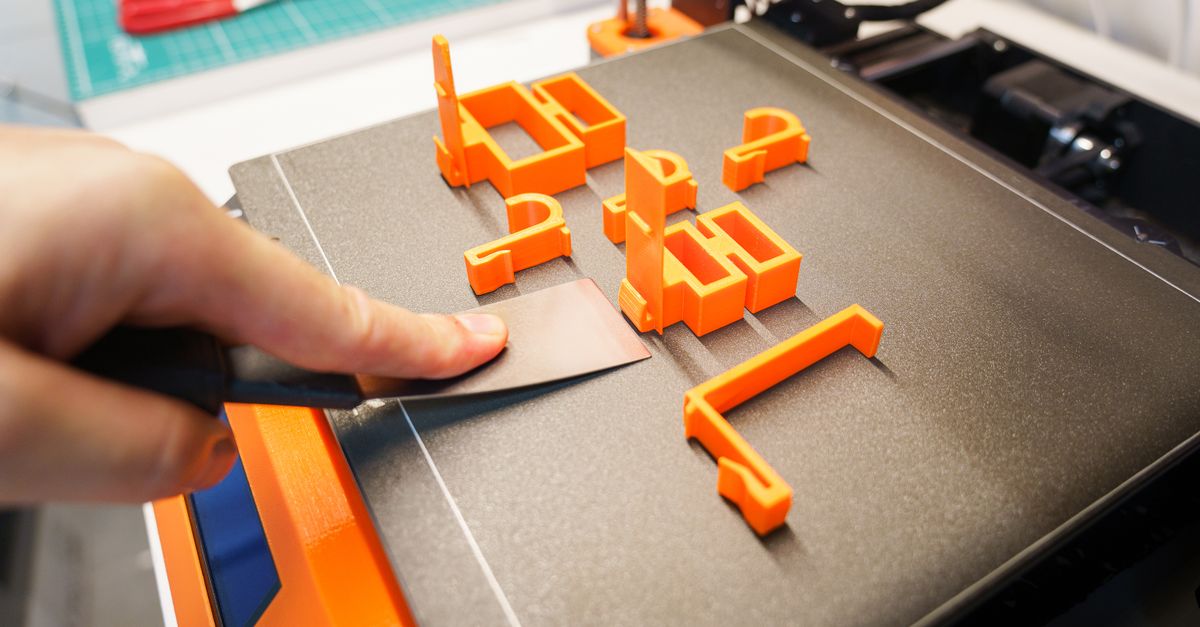
Photo by Jakub Zerdzicki on Pexels
Quality Control for 3D Printed Parts

Quality Control for 3D Printed Parts
Quality control in 3D printing goes beyond visual inspection. Whether you’re prototyping a new product or running small-batch production, understanding how to verify part quality ensures your components meet specifications every time. This guide covers the essential QC methods we use at CLT 3D Printing and what businesses should expect from their 3D printing service provider.
Why Quality Control Matters in Additive Manufacturing
3D printing isn’t a “set it and forget it” process. Variables like ambient temperature, filament moisture content, and printer calibration can affect part quality between prints. For businesses relying on 3D printed parts for manufacturing tooling or end-use products, consistent quality control prevents costly failures downstream.
The additive nature of FDM printing means defects can compound layer by layer. A slight under-extrusion on layer 50 might not matter for a prototype, but it could cause failure in a functional part. That’s why systematic QC catches issues before they become problems.
Dimensional Accuracy: The Foundation of QC
First-article inspection sets the baseline. When starting any production run, the first part off the printer gets measured against the CAD model. We check critical dimensions with calipers accurate to 0.001 inches, documenting any deviations. FDM printing typically achieves tolerances of ±0.005 inches (0.13mm) on well-calibrated machines.
Key measurements include:
- Overall dimensions (length, width, height)
- Hole diameters and center-to-center distances
- Wall thicknesses at multiple points
- Feature heights and depths
For parts requiring tighter tolerances, we adjust print settings like flow rate and temperature to dial in dimensions. Sometimes a 2% flow rate adjustment makes the difference between a perfect fit and a rejected part.
Photo by Jakub Zerdzicki on Pexels
Visual and Tactile Inspection Methods
Every part gets a hands-on inspection. Visual checks reveal surface defects, layer adhesion issues, and print artifacts that measurements might miss. We look for:
- Layer separation or delamination
- Stringing between features
- Over-extrusion creating blobs or zits
- Under-extrusion showing gaps in walls
- Warping or lifting from the build plate
- Support material remnants
Tactile inspection catches what eyes might miss. Running a finger along surfaces reveals rough spots, while gently flexing thin walls tests for brittleness. Parts should feel solid and uniform, not hollow or fragile where they shouldn’t be.
Material-Specific Quality Checks
Different materials require different QC approaches. PLA parts need checking for brittleness and dimensional stability at room temperature. PETG components get tested for layer adhesion strength since PETG can sometimes print with weak inter-layer bonds if temperatures aren’t optimal.
ABS prints warrant extra attention to warping and layer separation due to the material’s high shrinkage rate. We check ABS parts while still warm and again after cooling to catch any dimensional changes.
For specialty materials like TPU or Nylon, flexibility and chemical resistance become part of the QC process. A TPU gasket needs compression testing, while a Nylon gear might need a durability check under load.
Testing Methods for Functional Parts
Functional testing validates real-world performance. Beyond dimensional checks, parts destined for actual use need testing that simulates their application:
- Fit testing: Mating parts should assemble smoothly without forcing
- Load testing: Apply expected forces to verify strength
- Motion testing: Moving parts should operate through full range
- Environmental testing: Expose to expected temperatures and conditions
For example, drone components might need vibration testing, while automotive parts could require heat cycling. The testing matches the application.
Documentation and Batch Consistency
Tracking data enables continuous improvement. Professional 3D printing services document QC results for every batch. This includes:
- Print parameters (temperatures, speeds, layer height)
- Material batch numbers
- Dimensional measurements
- Pass/fail results
- Any adjustments made during production
This documentation helps identify trends. If parts consistently measure 0.2mm oversized in one dimension, we can adjust the model or slicer settings for future runs. Batch consistency improves with each iteration.
When to Request Enhanced QC
Not every part needs microscope-level inspection. Rapid prototyping for form and fit testing might only need basic dimensional checks. But parts for small-batch production or critical applications warrant enhanced QC protocols:
- Certified measurements: Documentation with actual measured values
- Statistical sampling: Measuring every Nth part in large batches
- Photography: Visual documentation of each part
- Custom test fixtures: Jigs to verify complex geometries
Discuss QC requirements upfront with your 3D printing service. The cost difference between basic and enhanced QC is minimal compared to the cost of bad parts making it into your assembly line.
Red Flags in 3D Printed Parts
Know what to reject. Some defects are cosmetic, others are critical:
Critical defects (reject):
- Missing features or incomplete prints
- Cracks or layer separation
- Dimensions outside specified tolerances
- Wrong material or color
- Contamination or foreign objects
Minor defects (evaluate):
- Surface blemishes on non-critical faces
- Slight stringing that’s easily removed
- Minor warping within tolerance
- Color variations in the same material
The acceptance criteria depend on the application. A promotional product needs perfect aesthetics, while a manufacturing fixture might tolerate cosmetic flaws if dimensions are correct.
Building QC Into Your Workflow
Quality control starts with design. Parts designed for 3D printing have fewer QC issues than those simply converted from traditional manufacturing. Consider:
- Adding measurement surfaces to complex parts
- Designing test features into prototypes
- Specifying critical dimensions clearly
- Including assembly references
Work with a 3D printing service that understands quality control. At CLT 3D Printing, we build QC into every step of the process - from file preparation through final inspection. This systematic approach ensures parts meet your specifications whether you’re ordering one prototype or 500 production units.
Ready to Start Your Project?
Quality 3D printed parts start with choosing the right service provider. Whether you need prototypes, production parts, or custom designs, we deliver consistent quality through systematic QC processes. Start your custom order today and experience the difference professional quality control makes.
Further Reading
Related Articles
Waterproofing 3D Prints: Methods & Materials
Learn proven techniques to make FDM 3D printed parts waterproof for outdoor and liquid-contact applications.
3D Printing Validation Testing Guide
Master validation testing for 3D printed parts with dimensional checks, strength tests, and material verification methods.
Cost-Per-Part Calculator for 3D Printing
Master the hidden variables that determine your true 3D printing costs and make smarter sourcing decisions.