


Smart Inventory: Digital Files vs Physical Stock

The warehouse is packed. Shelves overflow with spare parts that might be needed someday. Meanwhile, that one critical component you actually need? Backordered for six weeks. Sound familiar?
Digital inventory changes everything. Instead of rows of dusty parts consuming valuable space and capital, imagine storing thousands of components as simple CAD files - ready to print when needed. This isn’t science fiction. It’s happening right now across manufacturing, maintenance, and supply chain operations.
The Hidden Costs of Traditional Inventory
Physical inventory management creates cascading expenses that go far beyond the purchase price of parts. Warehouse space in Charlotte runs $6-12 per square foot monthly. Climate control for sensitive components adds another layer of cost. Then there’s inventory tracking software, staff time for cycle counts, and the inevitable write-offs when parts become obsolete.
Carrying costs typically run 20-30% of inventory value annually. For a company holding $100,000 in spare parts, that’s $20,000-30,000 yearly just to store items that might never be used. Factor in the opportunity cost of that tied-up capital, and the real expense becomes staggering.
Consider obsolescence risk too. Design changes render old parts useless. Materials degrade over time - rubber seals crack, plastics become brittle, metals corrode. That expensive inventory can transform from asset to disposal problem seemingly overnight.
How Digital Inventory Works
Digital inventory flips the traditional model. Instead of physical parts on shelves, you maintain a library of 3D design files. When a part is needed, you simply print it. The workflow looks like this:
- Catalog existing parts - Create or obtain CAD files for components
- Organize digital library - Tag files with part numbers, equipment models, specifications
- Print on demand - Produce parts as needed using FDM, SLA, or other appropriate methods
- Iterate designs - Update files instantly when improvements are identified
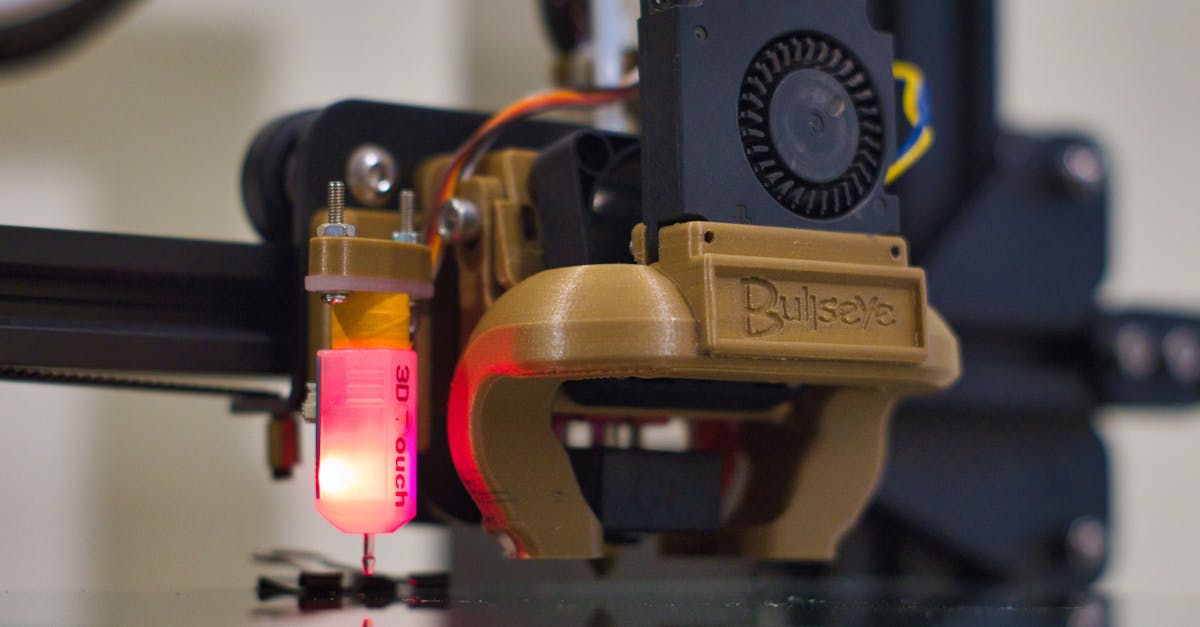
Photo by Kuba Grzybek on Pexels
The beauty lies in the flexibility. Need five units today and fifty next month? No problem. Design improvement identified? Update the file once, and every future print incorporates the enhancement. No need to scrap existing inventory.
Ideal Parts for Digital Inventory
Not every component suits digital inventory, but many do. The sweet spot includes parts that are:
Low to medium volume. If you need thousands monthly, traditional manufacturing might still win. But for parts used sporadically or in quantities under 500, on-demand printing often makes more sense.
Geometrically complex. Traditional manufacturing struggles with internal channels, undercuts, and organic shapes. 3D printing handles these features without special tooling.
Subject to revision. Products under active development benefit enormously from digital inventory. Update the file, not the warehouse.
Long-tail items. Legacy equipment parts, custom fixtures, specialized tools - items with unpredictable demand patterns - are perfect candidates.
Common examples include equipment housings, brackets, clips, spacers, handles, knobs, covers, ducts, and fixtures. Materials like PLA work well for indoor applications, while PETG provides chemical resistance and durability for more demanding environments.
Implementation Strategies That Work
Transitioning to digital inventory requires planning but doesn’t demand an all-or-nothing approach. Start with these proven strategies:
Phase 1: Low-Risk Pilots
Begin with non-critical parts. Brackets, covers, and organizational items let you test the workflow without risking production. Document time savings, cost reductions, and quality metrics to build the business case.
Phase 2: Expand Strategically
Target high-cost, slow-moving inventory next. Parts with carrying costs exceeding their annual usage value are prime candidates. Calculate the break-even point between storage costs and on-demand production.
Phase 3: Design for Digital
New product development should consider digital inventory from the start. Design parts that print efficiently. Consolidate assemblies where possible. Specify materials that align with your 3D printing capabilities.
File management matters. Implement version control, access permissions, and backup systems. Your digital inventory is only as reliable as your data management practices. Cloud storage with proper security provides accessibility while protecting intellectual property.
Real-World Benefits Businesses Experience
Manufacturing facilities report dramatic improvements after implementing digital inventory strategies. Space previously dedicated to parts storage gets repurposed for revenue-generating activities. Capital tied up in inventory funds growth initiatives instead.
Response time improves. Rather than waiting weeks for suppliers, critical parts can be produced in hours or days. This agility proves especially valuable for maintenance operations where downtime costs mount quickly.
Quality often improves too. Each part is made fresh to current specifications. No more installing five-year-old components that have degraded in storage. Design improvements get implemented immediately rather than waiting to exhaust old stock.
Consider a maintenance department managing equipment across multiple facilities. Traditional approach: stock common failure items at each location. Digital approach: maintain one file library accessible to all sites. Print parts where needed, when needed. The efficiency gains compound quickly.
Overcoming Common Concerns
“But what about material strength?” Modern engineering plastics like PETG offer impressive mechanical properties suitable for many applications. Where extreme strength is needed, techniques like increased wall thickness, strategic infill patterns, and fiber reinforcement expand possibilities.
“Isn’t printing slower than pulling from stock?” For the part in hand, yes. But consider total cycle time. No purchase orders, no shipping delays, no minimum quantities forcing excess inventory. The overall process often proves faster.
“How do we ensure consistency?” Digital files provide perfect repeatability. Unlike traditional manufacturing where tool wear creates variation, each 3D printed part matches the digital design precisely. Document print settings, and any technician can reproduce identical parts.
Calculating Your ROI
The financial case for digital inventory strengthens when you account for all factors:
Direct savings:
- Reduced warehouse space requirements
- Lower carrying costs
- Eliminated obsolescence write-offs
- Decreased minimum order quantities
Indirect benefits:
- Faster response to needs
- Improved cash flow
- Design iteration capability
- Reduced supply chain risk
A typical calculation might show: 100 SKUs averaging $50 value each = $5,000 inventory. At 25% carrying cost, that’s $1,250 annually just for storage. Add obsolescence risk, space costs, and management time, and the true cost often exceeds $2,000 yearly for parts that might sit untouched.
Compare that to maintaining digital files at essentially zero carrying cost, printing on demand as needed. Even accounting for slightly higher per-unit production costs, the total cost of ownership frequently favors digital inventory.
Getting Started with Digital Inventory
Ready to explore digital inventory for your operation? Start by auditing current physical inventory. Identify slow movers, high-value items subject to obsolescence, and parts with long lead times. These pain points become your pilot program.
Work with a knowledgeable 3D printing service to evaluate material options. PLA suits many indoor applications. PETG adds chemical resistance and temperature tolerance. Specialized materials like ASA or Nylon expand possibilities for demanding environments.
Document everything. Track traditional costs versus digital production. Measure lead time improvements. Note space savings and working capital liberation. This data builds the case for expansion beyond pilot programs.
Remember that digital inventory complements rather than replaces traditional methods. High-volume production runs still benefit from injection molding or CNC machining. But for the long tail of parts that complicate inventory management, digital files and on-demand production offer compelling advantages.
The future of inventory management isn’t about predicting needs months in advance. It’s about responding instantly when needs arise. Digital inventory powered by 3D printing makes that future accessible today.
Transform Your Inventory Strategy
Ready to reduce inventory costs while improving part availability? CLT 3D Printing helps Charlotte-area businesses implement digital inventory solutions. From initial part evaluation through production workflow design, we guide your transition to smarter inventory management. Start your digital inventory transformation today.
Related Resources
Related Articles
Waterproofing 3D Prints: Methods & Materials
Learn proven techniques to make FDM 3D printed parts waterproof for outdoor and liquid-contact applications.
3D Printing Validation Testing Guide
Master validation testing for 3D printed parts with dimensional checks, strength tests, and material verification methods.
Cost-Per-Part Calculator for 3D Printing
Master the hidden variables that determine your true 3D printing costs and make smarter sourcing decisions.