

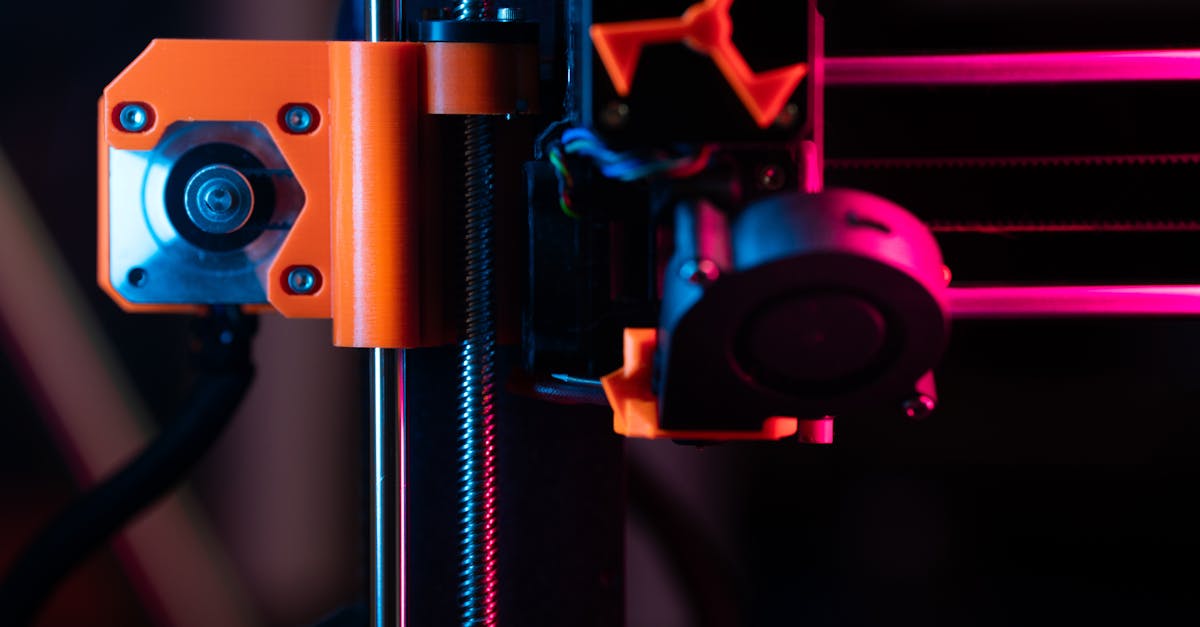
Photo by Jakub Zerdzicki on Pexels
Spare Parts Inventory Revolution

Spare Parts Inventory Revolution: How On-Demand 3D Printing Cuts Costs
Managing spare parts inventory has plagued manufacturers and equipment operators for decades. You either stock everything and tie up capital, or risk costly downtime when a critical part breaks. But what if you could store parts digitally and produce them only when needed?
On-demand 3D printing transforms spare parts management. Instead of warehouses full of slow-moving inventory, businesses now maintain digital libraries of part files ready for production at a moment’s notice. This shift represents one of the most practical applications of additive manufacturing for everyday operations.
The Traditional Spare Parts Problem
Traditional spare parts inventory creates multiple pain points for businesses. Physical storage requires valuable warehouse space, parts deteriorate over time, and capital sits idle on shelves. Industry studies show that up to 20% of spare parts inventory becomes obsolete before use.
The financial burden extends beyond purchase costs. Inventory carrying costs typically run 20-30% of part value annually when you factor in storage, handling, insurance, and obsolescence. A $100,000 spare parts inventory actually costs $120,000-$130,000 per year to maintain.
For legacy equipment, the challenge intensifies. Original manufacturers discontinue parts production, leaving operators scrambling for alternatives. Some facilities stockpile critical components “just in case,” tying up even more capital in insurance inventory.
How Digital Inventory Works
Digital spare parts inventory flips the traditional model. Instead of physical parts on shelves, you maintain a library of 3D print files. When a part breaks, you produce it on-demand using FDM 3D printing technology.
The process starts with part identification and digitization. Critical components get 3D scanned or reverse-engineered to create accurate digital models. These files join your digital inventory, ready for production whenever needed. Storage costs drop to essentially zero - a hard drive holds thousands of parts in the space of a coffee cup.
Material selection becomes strategic rather than restrictive. For a temporary fix, PLA provides quick turnaround at low cost. For permanent replacements, PETG or ABS match the durability of many injection-molded parts. We can even produce parts in specialized materials like TPU for gaskets and seals, though these require specific expertise.
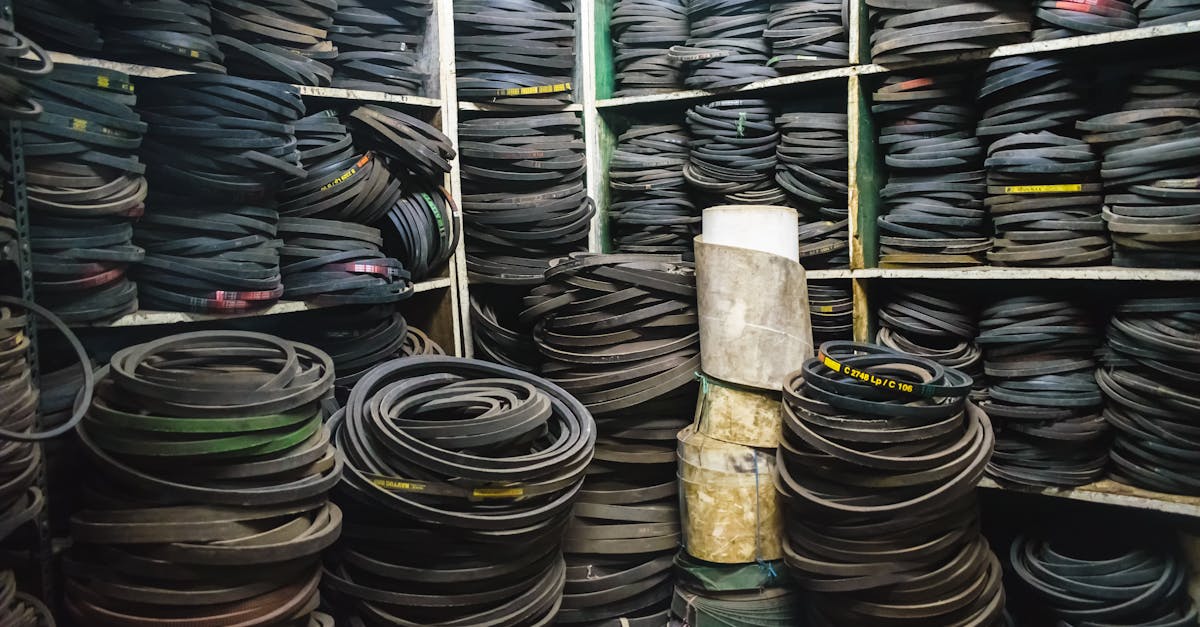
Photo by Balaji Srinivasan on Pexels
Industries Leading the Digital Transition
Manufacturing facilities embrace digital inventory for non-critical components. Machine guards, brackets, covers, and spacers represent ideal candidates. These parts often cost hundreds of dollars from OEMs but print for a fraction of that cost in PETG or ABS. One food processing plant might reduce guard inventory from 50 physical parts to 5 frequently-used items plus digital files for the rest.
The automotive restoration industry pioneered many digital inventory practices. Classic car enthusiasts face constant parts availability challenges. Interior trim pieces, dashboard components, and engine bay brackets that haven’t been manufactured for decades can now be recreated on demand.
Building maintenance operations benefit significantly. HVAC dampers, equipment feet, panel clips, and wire management components break unpredictably. Rather than stock dozens of variations, maintenance teams can print replacements as needed. Commercial property managers particularly value this approach for managing multiple buildings with varied equipment.
Real Cost Analysis: Physical vs Digital
Let’s examine realistic cost structures for spare parts inventory. Consider a typical manufacturing facility with 500 unique spare parts averaging $50 each. Traditional inventory investment: $25,000. Annual carrying cost at 25%: $6,250. Space requirement: 100+ square feet of warehouse shelving.
Digital inventory changes the equation dramatically. Initial 3D scanning and file preparation might cost $100-200 per complex part, less for simple components. Many parts can be modeled directly from drawings. Total digitization investment for 100 critical parts: $10,000-15,000. Annual carrying cost: minimal (cloud storage). Space requirement: none.
The production economics favor on-demand for slow-moving parts. A bracket that costs $75 from the OEM might print for $15-25 in PETG, including material and machine time. Even accounting for post-processing, the savings remain substantial for parts used infrequently.
Implementation Strategy That Works
Start small with non-critical, slow-moving parts. Identify components that tie up inventory capital but rarely get used. Simple brackets, covers, and spacers make excellent pilot projects. Track actual usage data - parts used less than twice annually become prime digital candidates.
Build your digital library systematically. As parts fail or require replacement, create digital files before disposing of the original. This opportunistic approach spreads digitization costs over time while building a valuable asset. Maintain both STL files for printing and original CAD files for future modifications.
Quality control requires attention but isn’t prohibitive. Establish clear categories: cosmetic parts (lowest requirements), functional non-stressed parts (moderate requirements), and structural components (highest requirements). Match material and print settings to each category. Our quality control processes ensure parts meet their intended use requirements.
Common Concerns and Solutions
“But what about part strength?” Modern FDM materials surprise many engineers. PETG approaches 50 MPa tensile strength - sufficient for many applications. Proper print orientation and settings optimize strength for specific load conditions. For truly demanding applications, consider carbon fiber composites or specify traditional manufacturing.
“How fast can I get parts?” Typical turnaround runs 1-3 days for local 3D printing services. Compare that to 2-4 weeks for many OEM orders. For critical spares, maintain minimal physical inventory while relying on digital backup.
“What about regulatory compliance?” Document your specifications, materials, and quality checks. Many industries accept 3D printed replacements for non-critical components. Work with your quality team to establish appropriate use categories and documentation requirements.
Software Tools for Digital Inventory
Managing digital spare parts requires organization beyond simple file folders. Several software platforms now specialize in digital inventory management for 3D printing. These systems track part specifications, material requirements, and revision history.
Cloud-based solutions offer accessibility advantages. Maintenance technicians can browse available parts from tablets on the shop floor. Approved files download directly to 3D printing service providers for immediate production. Version control ensures everyone works from current designs.
Integration with existing ERP and maintenance management systems continues improving. Some platforms now trigger automatic reorder points for frequently-used digital parts, maintaining small physical buffers while leveraging digital inventory for the long tail.
Future of Spare Parts Management
The trajectory points toward hybrid inventory models. High-wear items and critical-path components remain in physical stock. Everything else shifts to digital, produced on demand. This approach optimizes both capital efficiency and operational reliability.
Distributed manufacturing networks expand possibilities. Instead of shipping parts from central warehouses, companies will transmit files to local production partners. A broken part in Charlotte gets replaced by a Charlotte-based printer, eliminating shipping time and cost.
Material development accelerates these trends. Each advancement in FDM materials expands the range of replaceable parts. Where early 3D printing handled only prototypes, today’s materials match production plastics for many applications.
Making the Transition
Ready to explore digital spare parts inventory? Start by auditing your current spare parts spend. Identify slow-moving, high-value items that tie up capital. Calculate the carrying costs you could eliminate through digital inventory.
Select pilot parts based on geometry complexity, material requirements, and usage frequency. Simple parts with complex supply chains make excellent candidates. That custom bracket only available from an overseas supplier with 12-week lead time? Perfect for digital inventory.
Partner with experienced 3D printing service providers who understand production requirements. Look for capabilities in your required materials - PLA and PETG cover many applications, but some parts demand ABS or specialty materials.
Transform your spare parts strategy from reactive stocking to proactive digital management. Reduce inventory costs, improve response times, and eliminate obsolescence risks. The technology exists today - implementation just requires that first step.
Ready to digitize your spare parts inventory? Contact CLT 3D Printing to discuss your specific needs and explore pilot projects.
Related Resources
Related Articles
Waterproofing 3D Prints: Methods & Materials
Learn proven techniques to make FDM 3D printed parts waterproof for outdoor and liquid-contact applications.
3D Printing Validation Testing Guide
Master validation testing for 3D printed parts with dimensional checks, strength tests, and material verification methods.
Cost-Per-Part Calculator for 3D Printing
Master the hidden variables that determine your true 3D printing costs and make smarter sourcing decisions.