

Photo by Jakub Zerdzicki on Pexels
Zero-Inventory Manufacturing Dreams

Zero-Inventory Manufacturing Dreams
The promise sounds revolutionary: replace warehouses full of spare parts with a hard drive of digital files. Print on demand. Zero storage costs. No obsolete inventory. For businesses evaluating 3D printing, this vision of “digital inventory” often tops the list of expected benefits. But like most manufacturing revolutions, the reality proves more nuanced than the marketing suggests.
The Allure of Digital Warehouses
Traditional inventory carries hidden costs. Beyond the obvious expense of warehouse space, businesses face carrying costs, obsolescence risk, and tied-up capital. A manufacturer storing $100,000 in spare parts might spend $25,000 annually just maintaining that inventory. Factor in the parts that never sell, and the economics look even worse.
Enter 3D printing’s promise: store CAD files instead of physical parts. Need a replacement bracket? Print it. Customer wants a discontinued component? Print it. The appeal is obvious, especially for industries managing thousands of SKUs across decades-old product lines.
Where Digital Inventory Actually Works
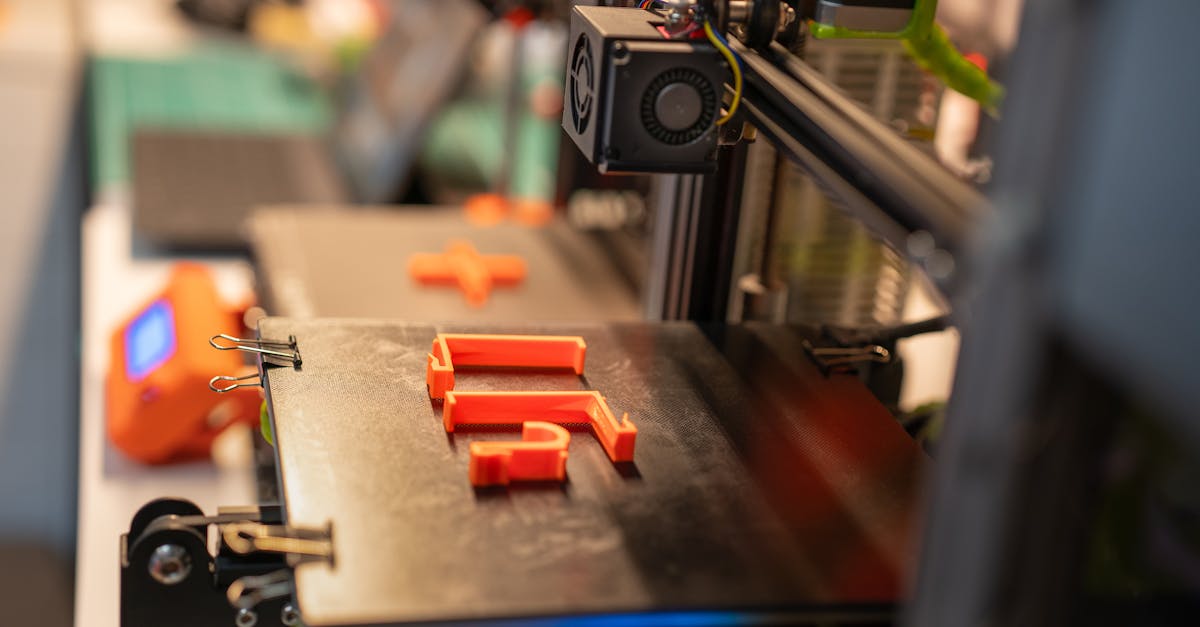
Low-volume, high-mix scenarios benefit most. Consider replacement parts for industrial equipment where you might need one specific component every 18 months. Storing hundreds of these slow-movers makes little sense when you can print on demand in PETG or ABS for durability.
The aerospace and defense sectors have embraced this model for non-critical components. When maintaining aircraft with 30-year service lives, the ability to print obsolete plastic brackets, clips, and covers eliminates the need to stock parts that might sit untouched for years.
Photo by FOX ^.ᆽ.^= ∫ on Pexels
Prototyping and development teams see immediate benefits. Instead of maintaining physical samples of every design iteration, engineers can store unlimited variations digitally. Need to revisit a design from six months ago? Pull up the file and print a fresh copy in PLA for evaluation.
The Reality Check
Not everything translates to print-on-demand. Metal components requiring specific heat treatments, parts needing tolerances tighter than ±0.005”, or anything requiring certified material properties still need traditional manufacturing. While we can print in engineering-grade materials like ASA and Nylon for specific applications, these represent capabilities rather than daily production materials.
Lead time expectations also need adjustment. “On demand” doesn’t mean instant. A complex part might need 8-12 hours of print time, plus post-processing. For businesses accustomed to pulling parts off a shelf, this requires workflow changes.
Hidden Costs of Going Digital
Digital inventory isn’t free inventory. Those CAD files need management, version control, and secure storage. Someone needs to maintain printer readiness, material stock, and quality procedures. The infrastructure for reliable on-demand production carries its own costs.
Material degradation presents another consideration. Unlike metal stock that can sit indefinitely, 3D printing filaments have shelf lives. PLA and PETG can absorb moisture over time, affecting print quality. Proper material storage with controlled humidity becomes essential for consistent results.
The Hybrid Approach
Smart businesses blend both strategies. Instead of viewing digital inventory as an all-or-nothing proposition, successful implementations typically follow this pattern:
Keep physical stock of high-turnover items and critical components. These parts need immediate availability and consistent quality that justifies traditional inventory.
Transition slow-movers to digital. Parts with sporadic demand, especially those prone to obsolescence, make ideal candidates for on-demand printing. Set realistic lead time expectations with customers.
Use 3D printing for customization. Rather than stocking multiple variations, keep base components physical and print custom adapters, mounting brackets, or configuration-specific parts as needed.
Making the Math Work
Consider a manufacturer with 1,000 spare part SKUs. Analysis might reveal:
- 100 high-volume parts worth traditional stocking
- 300 moderate-volume parts suitable for hybrid approach
- 600 slow-movers perfect for digital inventory
The key lies in categorization. Parts with predictable demand patterns, critical safety functions, or complex material requirements stay physical. Components with geometric complexity but flexible material requirements transition to digital.
Implementation Strategies
Start with non-critical parts. Test your digital inventory system with components where a 2-3 day lead time won’t impact operations. Build confidence in the process before tackling critical spares.
Invest in file management from day one. A disorganized collection of STL files quickly becomes unusable. Implement naming conventions, version control, and clear documentation about print settings, materials, and post-processing requirements.
Partner with reliable local services. Unless you’re printing daily, maintaining in-house capability for every material doesn’t make sense. Working with a local service like ours provides access to multiple materials and expertise without the overhead.
Looking Forward
The defense industry’s recent embrace of distributed manufacturing points toward the future. The U.S. Army’s investment in 50-printer facilities for battlefield manufacturing demonstrates confidence in on-demand production. While most businesses won’t need military-grade redundancy, the model shows what’s possible.
Industry 4.0 integration accelerates adoption. As manufacturing systems become more connected, triggering a 3D print job based on inventory levels or maintenance schedules becomes realistic. The dream of zero-inventory manufacturing may remain partially out of reach, but smart digital inventory strategies deliver real value today.
Getting Started with Digital Inventory
Whether you’re looking to reduce warehouse costs, eliminate obsolete inventory risk, or improve supply chain flexibility, 3D printing offers genuine opportunities. The key lies in realistic expectations and strategic implementation. Start small, measure results, and scale what works.
Ready to explore how digital inventory could transform your spare parts management? Our team can help evaluate which components make sense for on-demand production and develop a practical implementation plan. Contact us for a consultation.
Related Resources
Related Articles
Waterproofing 3D Prints: Methods & Materials
Learn proven techniques to make FDM 3D printed parts waterproof for outdoor and liquid-contact applications.
3D Printing Validation Testing Guide
Master validation testing for 3D printed parts with dimensional checks, strength tests, and material verification methods.
Cost-Per-Part Calculator for 3D Printing
Master the hidden variables that determine your true 3D printing costs and make smarter sourcing decisions.